
Software-defined cars are only as strong as the platform underneath

Built to improve,
update after update.
Platform readiness makes ”keeps getting better” real.
EX60 and “keeps getting better”: how HaleyTek contributes behind the scenes
Volvo Cars has shared the Volvo EX60 as a strong example of what customers increasingly expect: experiences that can be improved over time through software.
As a Volvo Cars-owned company, HaleyTek focuses on the platform work that helps make this sustainable at scale. Over-the-air updates (OTA) raise the bar for consistency, because an update needs to behave predictably across configurations and markets.
One area where you feel this immediately is audio. Great in-car audio should be consistent across speaker packages, not just in a single configuration. That’s why we’re strengthening software-defined audio capabilities in close collaboration with Volvo Cars.

Why software-defined audio matters
Audio is increasingly software-driven rather than hardware-bound. More of the listening experience is shaped by software, which enables faster iteration, smoother rollouts of improvements, and more consistent behavior across vehicle configurations.
Under the hood, this requires a platform that can handle multiple audio use cases efficiently and predictably.
Our work: DSP on the SoC
DSPs are a key enabler behind modern in-car sound, shaping clarity, balance, and how the system behaves across different setups. Using DSPs on the SoC instead of dedicated audio hardware can reduce cost while increasing flexibility, making it easier to add new features and improve audio quality over time.
At HaleyTek, we design and optimize DSP topology so multiple audio use cases can run concurrently and efficiently with predictable performance under load. This includes maximizing DSP core utilization and removing bottlenecks through algorithm-level optimization. Examples of low-latency use cases include road noise cancellation (RNC), which can be implemented directly on the SoC.
Our work: enabling Dolby Atmos at platform level
Immersive formats like Dolby Atmos only feel seamless when the platform foundations are robust across use cases and configurations.
Our role at HaleyTek is to enable key platform building blocks for Dolby Atmos, including:
codec capability (e.g., EAC3/EAC3-JOC) for native and projection use cases (e.g., Android and CarPlay)
audio pipeline configuration to support consistent decoding and rendering
predictable switching between stereo and multi-channel based on content and device capability
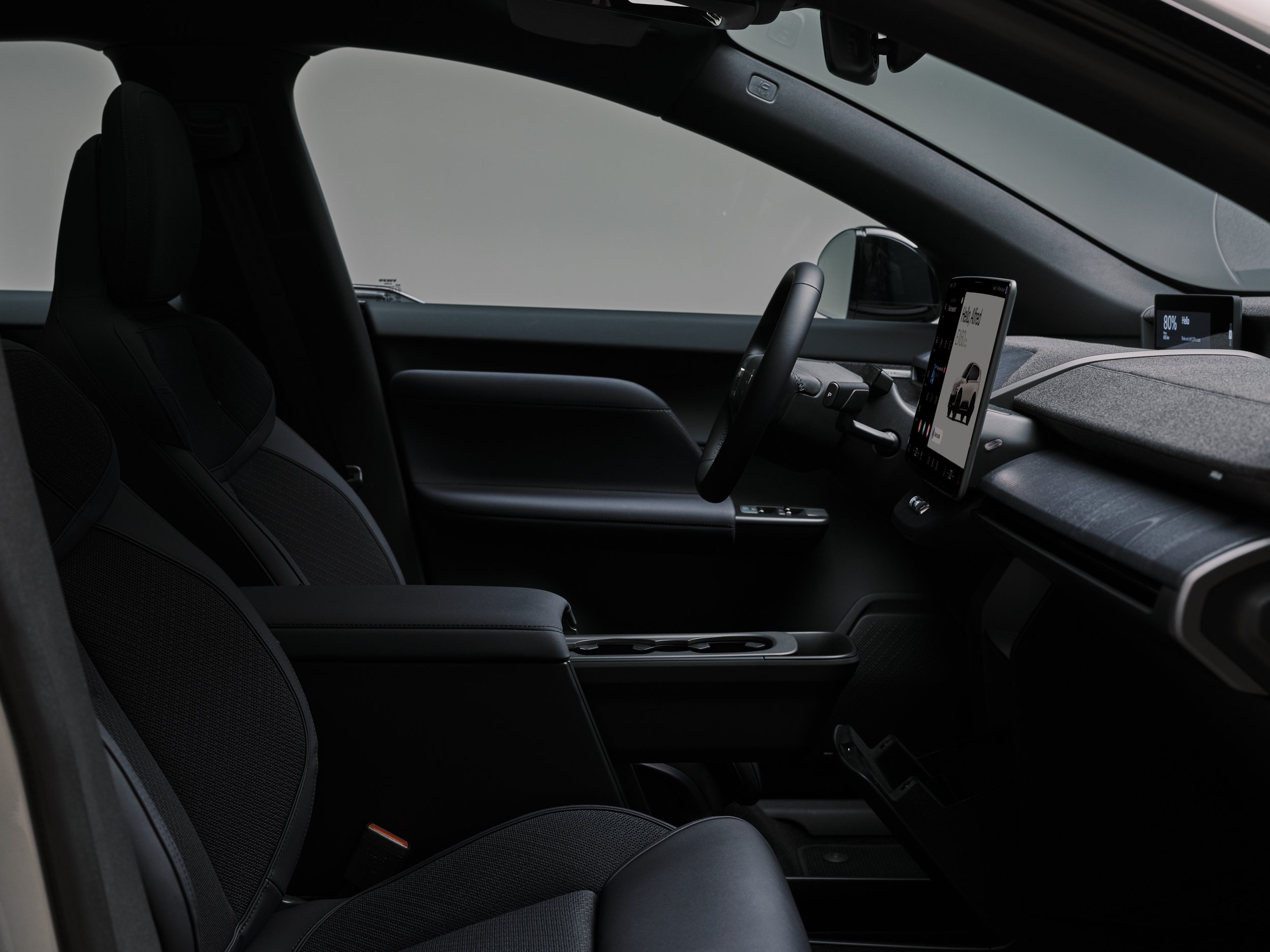
EX60 interior
The goal is simple: a premium experience that remains predictable across configurations, and can keep evolving through software over time.
Looking ahead
Software-defined experiences don’t scale by accident. They scale when platform foundations are built with consistency, performance, and upgradeability in mind.
We’ll continue sharing behind-the-scenes platform work that helps make “keeps getting better” real, across the areas we contribute to most.